Tech Transfer Contract Manufacturing for Personal Care Brands
Formula ownership and transfer rights depend on your agreements and documentation with your current manufacturer. Our team reviews available formula, packaging, sourcing, and production documentation to determine the appropriate transfer path. If documentation is incomplete or unavailable, our R&D team can evaluate whether product matching, reverse engineering, or reformulation is appropriate for the project.
- 40+ years of manufacturing expertise
- cGMP compliant, FDA-registered facility
- Structured process built for reliability
How Tech Transfer Works
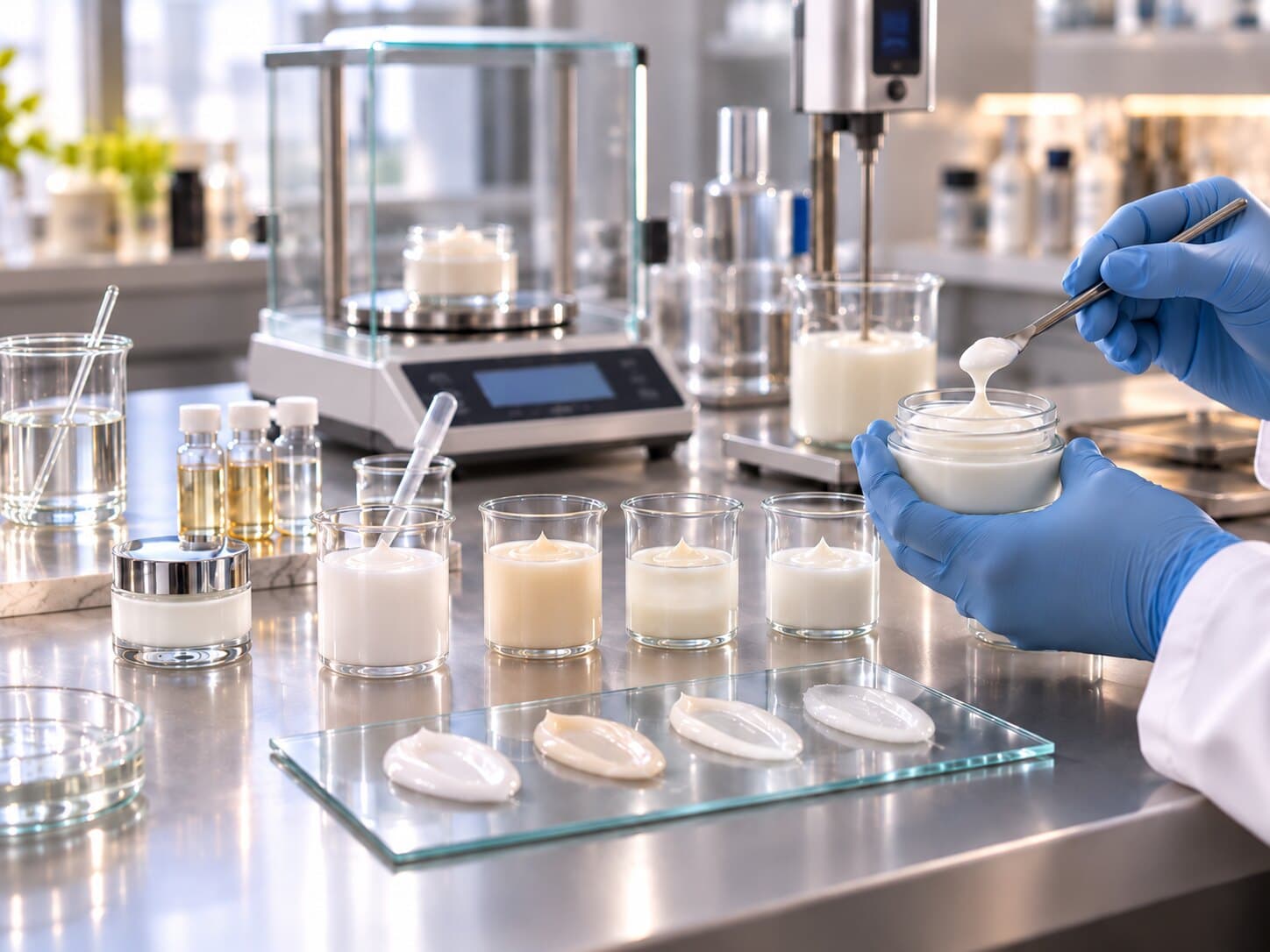
Technology Transfer applies when a brand owns or is authorized to manufacture an existing formula and can provide sufficient technical documentation for review. The documentation needed varies by project and may include formula percentages, manufacturing instructions, specifications, safety data, testing history, and other relevant technical records. Our team reviews the available information along with raw-material sourcing, processing requirements, packaging, filling, quality requirements, and equipment compatibility to determine whether a direct transfer is feasible.
Read the full processShow less
When formula access or documentation is incomplete, the project may be better suited to Reverse Engineering or reformulation. In that pathway, the existing product and the brand's desired characteristics serve as a benchmark while our R&D team develops and refines a new formula. The goal is to develop toward agreed sensory, performance, packaging, and commercial requirements rather than promise an exact duplicate.
Technology Transfer and Reverse Engineering are separate development paths, but either may require sampling, review, testing, packaging evaluation, scale-up, and other production-readiness work based on the project. Ally Labs does not charge a separate standard development fee for qualified manufacturing projects. Unusual raw-material, third-party testing, regulatory, documentation, or other project-specific costs are discussed and approved in advance when applicable.
Once formula approval, required testing, materials, packaging, and other production-readiness requirements are complete, the project can move into production scheduling.

Benefits of Tech Transfer
Protect Your Product Quality
Our formula and packaging review confirms your specifications and quality practices before we manufacture a batch. Results are evaluated against the approved specifications, and custom formula transfers complete the required minimum 90-day stability period before approval. Additional testing or review may be required depending on the formula, packaging, claims, or other project requirements.
Reduce Transition Risk
Switching manufacturers carries real risk, from documentation gaps to packaging mismatches to a formula that behaves differently at scale. For example, a shampoo formula might foam differently at a larger volume without proper controls. Our review process catches these issues before production, not after your product reaches customers.
Keep Production Moving
Beginning a Tech Transfer with Ally Labs does not require a brand to immediately stop production with its current manufacturer. The brand may continue working with its existing manufacturer while Ally Labs completes formula and documentation review, sampling, the required minimum 90-day stability period, sourcing, scale-up, and production-readiness work. Once the project is approved and scheduled for production at Ally Labs, the brand decides when and how to transition future production. This approach can help reduce transition risk, but Ally Labs does not guarantee uninterrupted supply or a gap-free changeover.
Gain a Long-Term Manufacturing Partner
A transfer starts a relationship, not a one-time project. We bring more than 40 years of experience to every transfer, so your brand gains a partner for the journey ahead. As your company grows into a key player in your category, your future product needs stay covered by the same team.
Which Pathway Fits Your Project?
Do you own or have authorized access to the complete formula and manufacturing process?
YES — Technology Transfer.
NO, OR THE FORMULA IS UNAVAILABLE — Reverse Engineering.
Switching manufacturers does not always require access to your current formula. If your brand owns or is authorized to manufacture the complete formula and process, Ally Labs can evaluate the project through a Technology Transfer. If the formula is owned by the current manufacturer or is otherwise unavailable, our team can evaluate a reverse-engineering pathway and develop a new formula based on the characteristics your brand wants to preserve.
Ally Labs does not charge a separate standard development fee for qualified manufacturing projects. Standard technology transfer review, reverse-engineering, reformulation, and sample development may be provided as part of qualified manufacturing opportunities. Unusual raw-material, third-party testing, regulatory, documentation, or other project-specific costs are discussed and approved in advance when applicable.
Technology Transfer
You own your formula and have the complete set: ingredients with exact percentages, process instructions, your supplier's testing documentation, and safety data sheets. We review those documents, confirm compatibility with our equipment, and validate production against your existing specs. Because you own it, we can also make changes to it.
Best for: Brands that own their formula and hold complete documentation for it.
Learn moreReverse Engineering
When formula access or documentation is incomplete, our team can evaluate the existing product as a benchmark for a new formula. Development focuses on agreed sensory, performance, packaging, and commercial requirements. Transition planning depends on project readiness and the client's current manufacturing relationship. No separate standard development fee for qualified manufacturing projects; ownership of the new formula is set out in your agreement with us.
Best for: Brands with a product in market that don't own the formula or can't get complete documentation.
Learn moreWho Needs Tech Transfer
Not every brand needs a tech transfer. Here's how to tell if switching is right for you.
Your Current Manufacturer Can't Scale With You
Your orders have grown past what your current manufacturer can reliably produce for your segment of the industry, and lead times keep slipping. A structured transfer moves your formula to a facility built to handle higher volume without losing consistency.
Quality Has Become Inconsistent
Batch-to-batch variation, missed specs, or recurring quality issues often point to gaps in process control or staff training. Tech transfer gives you a documented path to a facility with tighter process control.
You're Losing Confidence in Documentation
Missing batch records, incomplete safety data, or unclear regulatory filings put your brand at risk during an audit, and issues you notice too late are harder to fix. A transfer starts with a document review that closes these gaps.
You Need a Manufacturer That Feels Like a Partner
If your current manufacturer treats your brand as a transaction instead of a relationship, growth conversations and practical solutions go nowhere. We position ourselves as a strategic partner, offering guidance beyond just a production line.
When tech transfer might not be the right fit: if your current manufacturer is meeting your specs, timelines, and quality standards, a transfer may create disruption without a clear benefit. In that case, staying open with your current partner about the issue is often simpler.
Technology Transfer Process
Technical Document Review
We review available documentation for the client-owned or authorized formula, including formula percentages, manufacturing instructions, specifications, testing history, safety data sheets, and other relevant technical records.
Reverse Engineering Process
Benchmark Evaluation
The client provides the existing product to use as a benchmark, along with desired performance, texture, fragrance, appearance, packaging, target cost, and anticipated volume.
Why Choose Ally Labs for Tech Transfer
We've spent more than 40 years turning formulas into finished products, and that experience guides every transfer. We're cGMP compliant and FDA-registered, and we operate from a 183,000 square foot facility in Evanston, Wyoming, built to take on production at scale. New technologies across our lines support consistent production against the specs your brand depends on.
Read moreShow less
The biggest hesitation with switching manufacturers is disruption to sales already in market. Our document, formula, and packaging review happens before production starts, so your current production can continue while the transfer is reviewed and you decide when to place your first purchase order.
- 40+ years turning formulas into finished products
- Document, formula & packaging review before any production
- You can stay with your current manufacturer until the Ally Labs project is approved and scheduled
- cGMP compliant, FDA-registered — built for production at scale
About Ally Labs
Ally Labs is a contract manufacturer headquartered in Evanston, Wyoming. We provide formulation, manufacturing, filling, and packaging for personal care and specialty brands nationwide. We operate from a 183,000 square foot, cGMP compliant, FDA-registered facility. With more than 40 years of manufacturing experience, we help brands develop, launch, scale, and transition their products with confidence.
Frequently Asked Questions
Everything you need to know about working with Ally Labs. Can't find your answer?
View all FAQsStill have questions?
Our team is happy to walk you through your options and timelines.
Talk to our teamHow much does Tech Transfer cost with Ally Labs?
Ally Labs does not charge a separate standard Technology Transfer or formulation fee for qualified manufacturing projects. We review available formula and process documentation, packaging, testing history, sourcing requirements, and production needs, and work with your team to evaluate, scale, and where necessary reformulate the product before a purchase order is placed. Unusually expensive or specialized raw materials and project-specific testing, regulatory, documentation, or other requirements are discussed before work proceeds. Final manufacturing pricing depends on the formula, packaging, testing requirements, and order volume.
What is the difference between Tech Transfer and starting a new formula?
Technology Transfer begins with an existing formula that the brand owns or is authorized to manufacture and sufficient technical information to evaluate moving production. New Product Development begins with a product concept and develops a new formula around the brand's requirements. If an existing product is available but the formula or necessary documentation is not, our team can evaluate Reverse Engineering or reformulation as a separate pathway.
How long does Tech Transfer take?
Technology Transfer timing varies by project. Ally Labs reviews the formula and process, raw-material availability, packaging and equipment compatibility, and any sampling or scale-up work needed to evaluate manufacturing fit and production readiness. Once the formula is approved, required testing is addressed, materials and packaging are confirmed or on-site, and the project is production-ready, typical production lead time is approximately six to eight weeks. Actual timing varies by project and production scheduling.
What documents do I need to switch contract manufacturers?
The technical information needed varies by formula and project. Useful documentation may include the complete formula with percentages, manufacturing instructions, specifications, safety data sheets, testing history, packaging specifications, and other relevant technical records. Our team reviews what is available to determine whether Technology Transfer, Reverse Engineering, or reformulation is the appropriate path.
Do I actually own my formula?
Formula ownership and manufacturing rights depend on the agreements and documentation associated with the product. For Technology Transfer, Ally Labs needs to confirm that the brand owns or is authorized to manufacture the formula and has sufficient technical information for the transfer. Ownership rights themselves are governed by the applicable agreements.
Do I have to stop production while I switch?
Not necessarily. Transition planning depends on the current manufacturing relationship, inventory, documentation, and the work required before the new project is production-ready. In some cases, brands continue production with an existing manufacturer while transfer or development work progresses. Ally Labs does not guarantee uninterrupted supply or a specific transition date.
Will my product perform the same after a transfer?
For Technology Transfer, the goal is to manufacture the authorized formula according to the approved specifications and process requirements established for the project. Results are evaluated against applicable specifications rather than guaranteed to be identical in every respect. When Reverse Engineering is required, the existing product may instead serve as a benchmark for agreed sensory and performance targets.
What types of products can Ally Labs evaluate for Tech Transfer?
Ally Labs supports Technology Transfer across products that fit our confirmed manufacturing capabilities. Each opportunity is reviewed for formula, processing, raw materials, packaging, filling, equipment, testing, regulatory considerations, and commercial fit. Select specialty and topical OTC projects are evaluated individually.
What should I consider when switching contract manufacturers?
A transition can involve documentation, sourcing, packaging, scale-up, scheduling, and formula-performance considerations. A structured review helps identify these requirements before production scheduling, including technical-document review, formula and process evaluation, packaging review, sampling or scale-up where appropriate, and production-readiness planning.
What happens if my current manufacturer will not share my formula documentation?
Whether a project can proceed through Technology Transfer depends on the brand's ownership or manufacturing authorization and the technical information available. If the formula or required documentation is unavailable, our R&D team can evaluate whether Reverse Engineering or reformulation is an appropriate alternative. The existing product can serve as a benchmark while a new formula is developed toward agreed sensory, performance, packaging, and commercial requirements.
Ready to Make the Switch?
Bring us your current formula and documentation — or just the product itself — and we'll confirm whether tech transfer or reverse engineering fits, then map a structured move designed to support transition planning and reduce production-transfer risk.
Start Your TransferDo You Own Your Formula?
This is an initial documentation check, not a determination of ownership or transfer rights. Four documents tell us which pathway to evaluate. Answer honestly, including "not sure," and we'll tell you which one applies.
1.Do you have the full ingredient list with exact percentages?
Not just an INCI list in descending order — the actual formulation percentages.
2.Do you have the process instructions?
Mixing order, temperatures, hold times: how the batch is actually made.
3.Do you have safety data sheets for the raw materials?
One SDS per raw material, not just for the finished product.
4.Do you have your supplier's raw material testing documentation?
Certificates of analysis showing each material met spec on arrival.
0 of 4 answered.